Business software · Applied AI
ZIGOMA
AI-native ERP for modern SMEs
An integrated business system connecting CRM, sales, invoicing, stock, projects and finance, with contextual AI governed by permissions and human validation.
Python · Flask · Firestore · OpenAI · Pandas · NumPy · Tailwind · WeasyPrint
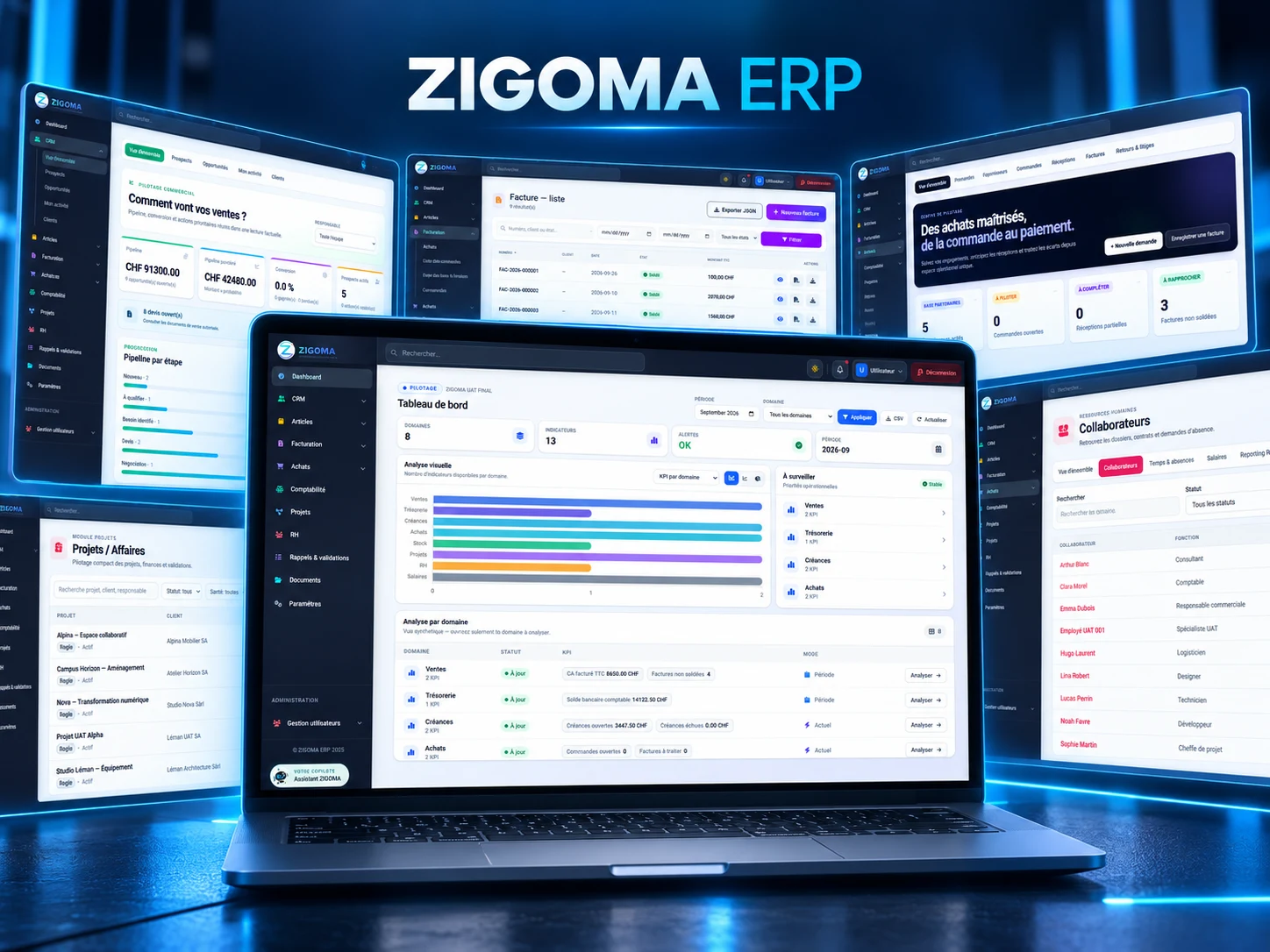
Context
ZIGOMA is a modular business ERP designed to bring an SME’s daily operations into one product. It connects customer relationships, sales, invoicing, stock, projects and finance.
Business problem
When those activities live in separate tools, data is entered repeatedly, workflows become manual and operational visibility suffers. The product aims for continuity across CRM, quotes, orders, delivery, invoicing and financial follow-up.
My role
- Lead Developer
- Full-stack engineering
- Software architecture
- Applied AI
- Product engineering
- UX decisions
- Testing strategy
Product & solution
The product organizes business modules around connected workflows: CRM, sales, quotes, orders, delivery notes, invoicing, stock, projects, finance, analytics and an AI assistant. Sensitive actions remain subject to roles, permissions and human validation.
Inside the product
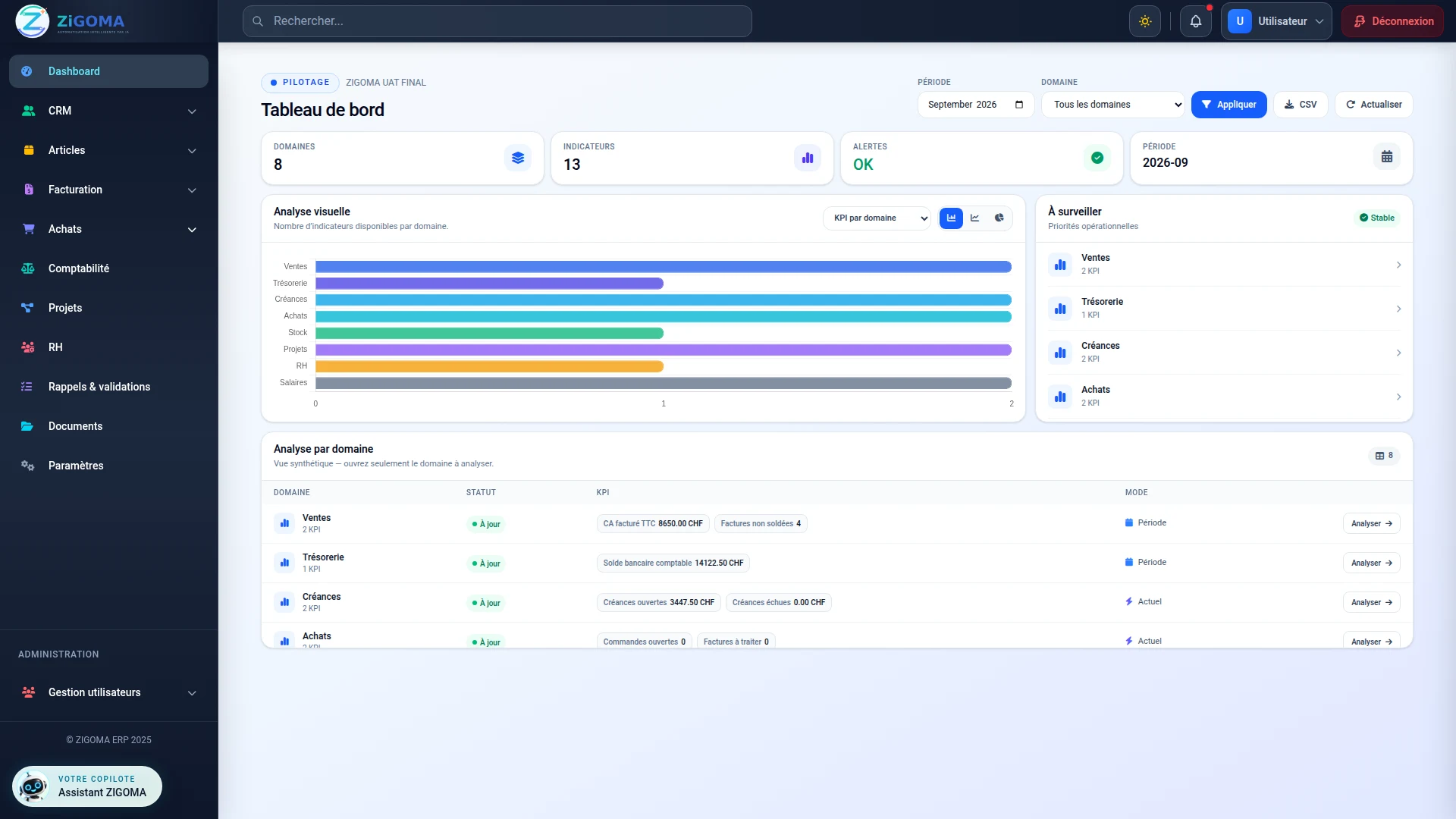
01 / 06Dashboard
Indicators and activity across ERP domains.
Architecture
Layered boundaries allow business domains to evolve without mixing interface, rules, storage and integrations. This is a conceptual view and exposes no private code.
- User interface and experience
- Application and orchestration
- Business services and modules
- Data and consistency controls
- Contextual AI and integrations
AI layer
AI works within business context: it can help interpret, structure and propose, but cannot bypass permissions or validation. BASE and voice provide additional ways to interact.
- Business context and targeted capabilities
- BASE and voice interaction
- Structured reasoning
- Permission checks
- Human validation
- Guardrails and traceability
Engineering challenges
Double-entry accounting
Preserving balanced entries and consistent financial flows.
Idempotence
Preventing repeated actions from producing duplicate business effects.
Accounting period controls
Respecting accounting periods in financial operations.
Atomic stock transfers
Keeping both sides of a transfer consistent.
Multi-company isolation
Separating data and actions by the active company.
RBAC
Aligning available actions with roles and permissions.
Anti-double billing
Protecting document flows against duplicate invoices.
Auditability and testing
Making business decisions and transitions verifiable.
Key capabilities
- CRM and sales tracking
- Quotes, orders and delivery notes
- Invoicing
- Stock movements
- Project management
- Finance and accounting
- Dashboards
- Contextual business assistant
- Multi-company and RBAC
Technology stack
- Python
- Flask
- Firestore
- OpenAI
- Pandas
- NumPy
- Tailwind
- WeasyPrint
Outcomes
- A connected business flow from customer relationship to invoice.
- Financial and stock operations designed to remain controllable.
- AI assistance integrated into the product with human validation.